Bricks Royale-Brick Balls Game
- 4.6
- Rating
- 1.00M
- Installs
- Free
- Price

 Analysis by App-foxy
I started Bricks Royale-Brick Balls Game expecting a simple arcade distraction, and that is exactly where its appeal begins. I aim a shot, watch the balls scatter across a wall of bricks, and wait for the chain of impacts to decide whether the move was clever or merely lucky. The action is easy to understand within seconds, but the result keeps giving me a reason to try one more round.
This is a free arcade game from POLYVERSE INC. with an Everyone content rating. It has built a sizeable audience, with an average rating of 4.6 from around 45 thousand ratings and more than 1 million installs. Those figures do not automatically make a game good, but they fit my experience: this is an accessible pick-up-and-play title rather than a demanding game that expects a long tutorial or a large time commitment.
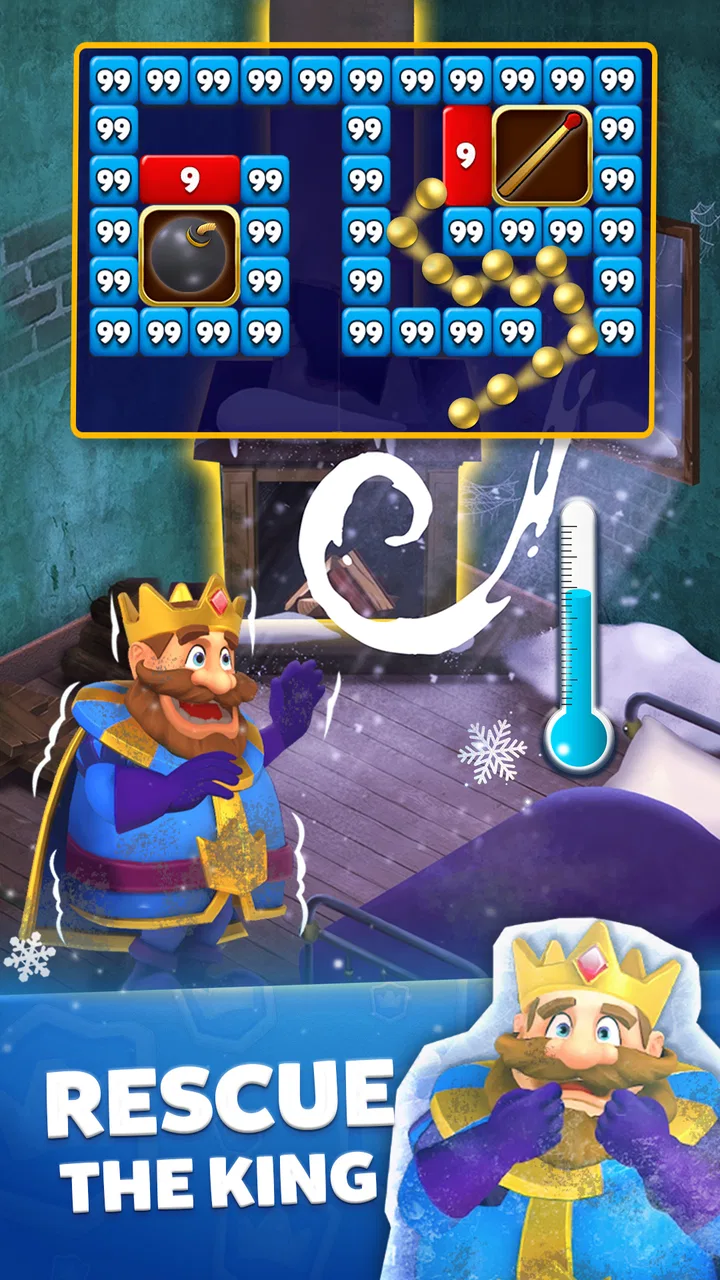
The basic idea is to shoot balls at bricks and help save the king from danger. I would not describe it as a story-heavy adventure. The king gives the action a light objective, while the real attraction is the repeating arcade rhythm: choose an angle, release the shot, watch the collisions, collect the result, and decide whether to continue. That compact loop works particularly well when I have only a few spare minutes.
You May Also Like

 Blood Strike: 2.5 Anniversary
Blood Strike’s Loadouts Turn Every Drop Into a Tactical Gamble
A close look at Blood Strike’s custom loadouts: how fast access to signature weapons reshapes its battle royale rhythm, rewards preparation, and narrows the gap between fights.

 Pandora - Music & Podcasts
Pandora’s Music Is Easy to Start, but Harder to Recover
Pandora’s strength is its low-effort path from a seed to a station. Its weak spot is how much confidence it asks you to place in connection, setup, and quiet recovery.

 8 Ball Pool
 Is Built on Rivalries, Rematches, and Routine
A close look at the rivalries, rematches, shared routines, and unanswered safety questions that turn a quick pool match into a persistent mobile community.

 Samsung Music
’s Quiet Strength Is Playing What You Already Own
Its reach comes less from spectacle than from dependable access to a personal library. That simplicity is both the app’s strongest retention engine and its ceiling.

 AccuWeather: Weather Radar
AccuWeather Review: A Quick, Clear Forecast for Everyday Decisions
For everyday plans, the best forecast is the one you can understand quickly. AccuWeather makes rain timing, radar, and local conditions easy to act on, with a few trade-offs.

 Hill Climb Racing
Why Hill Climb Racing Still Turns Crashes Into One More Run
A tiny car, a bumpy hill and one more upgrade: Hill Climb Racing keeps resurfacing because its simple chaos makes every near-miss feel personal.
More From Our News Desk



How the brick-shooting loop feels in practice
I find the appeal of this loop is how it turns a brief pause into a small aiming problem: before each shot, I can choose whether to target an immediate obstacle or set up a more useful path through the bricks. I also try to watch where the balls finish, since that gives me a practical clue about how to adjust the next launch. That balance of planning and unpredictable rebounds is what shapes the experience.
The first shot is simple, but the angle matters
The opening interaction is immediately readable. I do not need to learn a complicated control scheme before playing. The important decision is where to send the shot, not how to operate a large collection of buttons. That makes the game friendly to someone who wants a quick break, while still leaving room for better judgement once the bricks begin to form awkward patterns.
My first instinct was to aim directly at the most obvious brick. That usually produced a result, but not always the best one. The more useful approach is to look for an angle that keeps the balls moving through several targets instead of ending their journey quickly. A shot that reaches the upper or side areas can create more useful rebounds than a straight attack aimed only at the nearest obstacle.
This is one of the game’s better hidden strengths: the control is uncomplicated, but the board encourages spatial thinking. I am not solving a deep puzzle, yet I am constantly estimating where the first impact will happen and how the following bounces might develop. The exact outcome is not completely under my control, which gives each launch a small element of suspense.
That uncertainty also creates the first trade-off. A safe shot can clear a visible brick but leave the next arrangement in an awkward state. A more ambitious angle may produce a much better chain, but it can also fail to reach the area I wanted. I enjoy that tension because it makes the launch feel like a decision rather than a routine tap.
Impact feedback keeps the action moving
The feedback arrives in a satisfying sequence. The ball hits, changes direction, strikes again, and gradually turns one release into a little burst of activity. I can follow the path of the shot without needing to pause and interpret a complicated interface. The action is most enjoyable when several collisions happen in succession and the board visibly changes before the balls return.
That rhythm is important because the player is not constantly making inputs. Much of the excitement comes after the shot has already been released. I make one choice, then watch the game reveal whether that choice had enough reach and momentum. The waiting period is short enough to stay engaging, but long enough for the outcome to feel earned rather than instant.
I found it useful to treat every launch as information for the next one. If a shot leaves a dense group of bricks untouched, I can adjust the angle on the following turn. If the balls repeatedly disappear into an unhelpful section, I know that aiming at the same point is unlikely to improve the position. This makes the game more enjoyable when I stop chasing a perfect shot and instead build a better understanding of the board.
For a casual arcade title, that is a meaningful distinction. The game is not only about tapping quickly. It rewards patience before the launch and attention during the rebound sequence. I still get the immediate satisfaction of breaking bricks, but I also get small lessons about positioning, timing, and risk.
Why the reward arrives at the right moment
The reward is tied closely to visible progress. Bricks break, the danger feels reduced, and the board moves closer to a clear state. I like that the game does not hide the result of my action behind a menu or a long explanation. The payoff is on the screen, directly connected to the shot I just made.
The most rewarding moments are not necessarily the biggest-looking ones. Sometimes the best result is a modest launch that removes the brick threatening to make the next turn difficult. In other situations, a risky angle creates a long chain and changes the whole board. Learning to value both kinds of progress helped me play more consistently.
A useful habit is to separate immediate destruction from future setup. If I focus only on breaking the largest visible group, I may leave the remaining bricks arranged in a way that limits the next shot. When I consider where the balls will return and what targets will remain afterward, the reward becomes more strategic. I am not just clearing the current turn; I am trying to make the next turn easier.
This is also where the game differs from very basic brick-breaker alternatives. In a purely reflex-driven version, the pleasure may come mostly from speed or constant movement. Here, the pause before each launch gives me more ownership over the result. It feels closer to a compact aiming puzzle wrapped in arcade presentation than to an endless test of rapid reactions.
The reset is what makes another session tempting
Every round eventually reaches a point where I either improve the board or face a more difficult arrangement. That creates a natural reset point. When a session ends, I do not need to remember a complicated plot or reconstruct a large map. I can simply start again, apply what I learned, and see whether a different opening angle produces a better chain.
This reset is the central reason the game works as a short-session title. I can play while waiting for food, during a brief commute break, or when I want something more interactive than scrolling. A round has a clear beginning and a clear outcome, so I do not feel forced to reserve a long uninterrupted period for it.
At the same time, the reset can feel repetitive if I am looking for a substantial campaign. The core action remains focused on shooting balls and breaking bricks, so players who need character development, exploration, or major changes between sessions may lose interest. I would recommend it to someone who enjoys refining small decisions, not to someone expecting a large arcade adventure.
My best everyday use case is a ten-minute pause between tasks. I can open the game, make a few deliberate shots, and stop without leaving an elaborate mission unfinished. If I have more time, the same loop can stretch into a longer session because each result invites another attempt. That flexibility is more valuable to me than a complicated progression system would be.
What makes it different from familiar alternatives
Compared with classic paddle-and-ball brick breakers, this game puts more emphasis on selecting a launch angle and observing the resulting chain of impacts. I am not spending the whole round steering a paddle from side to side. That makes the experience calmer and more deliberate, although it also means players who love constant reflex action may find it less intense.
Compared with match-style puzzle games, the satisfaction here comes from physics-like rebounds and accumulated hits rather than arranging colored pieces. I get a clearer connection between one aim and one outcome. The trade-off is that the result can feel less predictable than a carefully planned matching move, so perfectionists may dislike the moments when a promising shot does not unfold as expected.
Compared with endless runners or fast reaction games, it is easier to pause mentally between actions. I can examine the board and choose an approach instead of reacting continuously. That makes it a better fit for relaxed play, but not the best choice when I want an adrenaline-heavy arcade challenge.
The game’s strongest identity comes from that middle ground. It is more thoughtful than a button-mashing distraction, yet much lighter than a full puzzle game. The king-saving premise adds a little purpose to the brick clearing, but the real reason I return is the compact experiment of trying a new angle and seeing how far the chain travels.
Small techniques that improved my results
The first technique I would suggest is to search for wall contacts. A direct hit can be useful, but a shot that reaches a wall at a favorable angle may travel through more of the board before returning. I do not try to calculate every bounce perfectly; I simply look for routes that keep the balls active instead of sending them into a short, unproductive path.
The second is to avoid clearing only the easiest target. A brick that appears convenient may not be the most important one. I pay attention to clusters that could restrict the next launch and try to open a route through them. This is especially helpful when the board begins to feel crowded and a single poor choice can make later shots less flexible.
The third is to use failed shots as feedback rather than immediately repeating them. If the balls return without affecting the area I needed, I change the angle or choose a different target. That sounds obvious, but the game’s quick restart rhythm can encourage automatic play. Slowing down for a moment often produces a better result than launching again from the same position.
I also find it helpful to watch the end of each shot instead of looking away once the first impact happens. The final position of the balls and the remaining brick layout can reveal which side of the board is becoming difficult. This turns the reward phase into preparation for the next action, strengthening the loop rather than treating each shot as an isolated event.
Where the free model fits into the experience
The game is free to download and play, with optional in-app purchases ranging from $0.99 to $99.99 per item. That range matters because casual players should decide in advance how they want to approach the game. I would begin without spending anything and judge whether the basic loop is enough for my habits before considering any optional purchase.
For me, the strongest value is that the central activity is easy to sample in short bursts. A free entry point makes sense for this kind of arcade game because I can discover whether the aiming and rebound rhythm suits me without committing money first. The important question is not whether the game can occupy every evening, but whether its repeated shots remain enjoyable over time.
Players who dislike optional spending in free games may still feel some friction around the broader model, even if they never buy anything. I would be especially cautious if I tend to spend impulsively when a round goes badly. Setting a personal limit before playing is a practical way to keep the experience focused on improving aim rather than chasing a quicker solution.
The Everyone rating also makes it approachable for a broad audience. I can recommend it as a light arcade option for family-friendly play, provided the person understands that the game’s appeal is repetition and refinement rather than a deep narrative. Younger players may enjoy the immediate brick-breaking feedback, while older players may appreciate the low-pressure aiming decisions.
Device expectations and the current build
The current version is 6.4.0, and it supports devices running Android 7.0 or later. That gives the game a relatively broad Android reach, which suits its role as a lightweight pick-up-and-play title. Before installing, I would still check the operating system on an older device, especially if I am using a phone that has not been updated for a long time.
I would not choose this game because I expect a technically elaborate production. Its value is in the clarity of the shot, the visible chain of impacts, and the quick return to decision-making. If I want a visually expansive arcade experience with complex controls, this is probably too focused. If I want something that gets to the action quickly, the straightforward presentation is an advantage.
The developer, POLYVERSE INC., has positioned the game around a very specific kind of repeatable play. That focus is helpful: I know what I am opening the app to do. It also means the game cannot disguise a lack of interest in the core loop with unrelated systems. If the brick-shooting rhythm does not appeal to me after several sessions, there is not likely to be a completely different mode of play waiting to change my mind.
Who should play it and who should skip it
I think it is a good match for people who enjoy short arcade sessions, aiming challenges, and watching one decision unfold through several rebounds. It is also suitable for players who prefer games that explain themselves through interaction rather than long instructions. The quick reset makes it convenient for breaks, and the gradual improvement in shot selection gives repeat attempts a clear purpose.
I would skip it if I need a strong story, a large world, competitive multiplayer, or a constantly changing set of activities. I would also look elsewhere if I prefer direct reflex control over planning a launch. The game asks me to accept a little uncertainty after each shot, so anyone who wants complete control over every movement may find the bounce-based outcome frustrating.
It is not the best replacement for a traditional brick breaker if the paddle is the part I love most. It is also not a substitute for a deeper puzzle game when I want layered rules and long-term problem solving. Its appeal is narrower and more honest: I choose an angle, create a burst of destruction, learn from the board, and try again.
My verdict on the complete action-feedback-reward-reset cycle
After spending time with it, I see why the game can keep pulling me into another session. The action is immediate, the feedback is easy to follow, the reward is visible, and the reset is painless. Each cycle leaves me with a small question: could a different angle clear more bricks, protect the next turn, or create a longer chain?
That question is enough to sustain the experience when I am in the mood for focused casual play. The game does not need a complicated explanation because its pleasure is contained in the movement from decision to impact. My best sessions are not about rushing. They come from taking a second to read the board, choosing a route, and watching the consequences unfold.
There are limits. Repetition is unavoidable, the outcome is not always fully predictable, and players seeking depth may outgrow the format. The optional purchase range is another reason I would approach it with a clear personal budget. Still, those drawbacks do not undermine the central design when judged on its own terms.
My recommendation is simple: try it if you want a free, family-friendly arcade game built around deliberate shots and satisfying brick-breaking chains. I would keep it installed for short breaks because it respects my time while still giving each attempt a little room for thought. It is not a grand adventure, but as a compact loop of action, feedback, reward, reset, and renewed curiosity, it does its job very well.
FAQs for Bricks Royale-Brick Balls Game
01What is Bricks Royale – Brick Balls Game?
Bricks Royale – Brick Balls Game is a casual brick-breaking puzzle game for Android and iOS. You launch balls at numbered blocks, try to clear the board before the bricks reach the bottom, and use angles, rebounds, and power-ups to create effective shots. It is easy to learn, but later stages require planning rather than simply aiming at the largest brick.
02How do you play Bricks Royale – Brick Balls Game?
Each turn lets you aim a stream of balls toward the brick formation above. Bricks lose durability when hit, and collecting extra balls or useful power-ups can make future rounds easier. The main strategy is to choose an angle that produces several rebounds and damages multiple blocks. Clearing bricks efficiently is important because their numbers increase as the game progresses.
03Is Bricks Royale – Brick Balls Game free to download and play?
The game is generally available as a free download, allowing players to begin without purchasing it in advance. However, free mobile games commonly include advertising and optional in-app purchases, such as boosters, extra resources, or other conveniences. Before downloading, check the current Google Play or App Store listing for the exact purchase options, supported devices, and any changes to its monetization.
04Can Bricks Royale – Brick Balls Game be played offline?
Some brick-breaking sessions may work without a continuous internet connection, which is convenient for short trips or areas with weak signal. Nevertheless, online access may still be needed for advertisements, rewards, cloud features, updates, or certain events. Offline availability can also vary by version and device, so it is best to test the game after installation rather than assume every feature works without internet.
05Is Bricks Royale – Brick Balls Game suitable for children and casual players?
The basic controls are simple enough for casual players and children who enjoy relaxed arcade puzzles: aim, release, and watch the balls bounce through the bricks. Difficulty increases over time, so younger players may need help with planning difficult shots. Parents should also review the store age rating, advertising behavior, and in-app purchase settings before allowing a child to play independently.
Pros
- Simple controls make it easy to start playing immediately.
- Short levels fit well into quick gaming sessions.
- Colorful visuals and satisfying brick-breaking effects.
- Offline play is convenient when no connection is available.
- Power-ups add variety and help clear difficult formations.
Cons
- Difficulty can rise sharply in later levels.
- Repeated layouts may make the gameplay feel predictable.
- Ads can interrupt the experience between rounds.
- Some power-ups or bonuses may require in-app purchases.
- Progress may feel slow without spending extra time or money.

Bricks Royale-Brick Balls Game
Gallery